Why finding a truly effective Korean interpreter in Seoul is harder than it looks
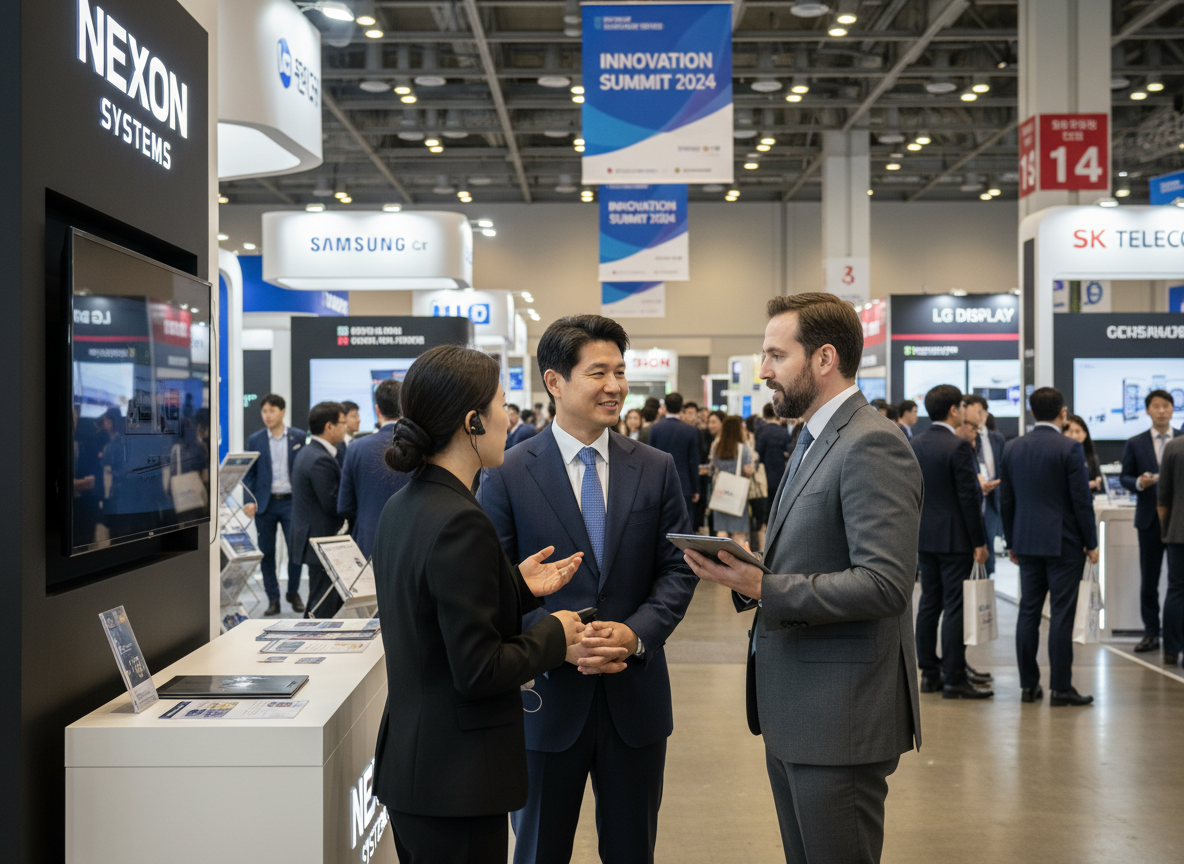
If you are flying into Seoul for negotiations, supplier visits, or a trade show at COEX or KINTEX, you already know you will need Korean language support. What many business travelers underestimate is that the real challenge is not vocabulary. It is finding someone who can operate at the level of your deal, read the room in Korean corporate culture, and protect your position while keeping the conversation moving.

On paper, Seoul looks like an interpreter-rich market. In reality, the pool of professionals who can handle high-stakes meetings in English and Korean — with industry-specific knowledge and business maturity — is much smaller than you think. The difference becomes obvious the moment a discussion turns sensitive, numbers get serious, or senior Korean executives walk into the room.
Bilingual does not mean business interpreter
One of the most common mistakes visiting executives make in Seoul is assuming that any bilingual Korean colleague, friend, or junior staff member can “help translate” a meeting. They may be fluent, they may have studied abroad, but interpreting is a distinct professional skill — closer to deal facilitation than to casual conversation.
A trained interpreter is listening, processing, and reformulating in real time while tracking tone, hierarchy, and risk. They understand when a Korean counterpart is speaking indirectly to avoid conflict, when a non-committal response actually means “no,” and when silence is a negotiation tactic rather than confusion. Someone who is merely bilingual will often render words accurately but miss the underlying intent, or soften critical messages to avoid discomfort.
Consider a common scenario: a Korean supplier hesitates over a pricing concession and says, “We will review internally and get back to you.” A literal translation sounds neutral. A seasoned interpreter, knowing the internal decision dynamics, may privately flag to you that this is effectively a rejection unless something material changes — and help you adjust your strategy before you walk out of the room believing progress was made.
Clarify your use case before you start looking
Before you reach out to any interpreter in Seoul, get specific about what you actually need. Different business situations call for different profiles and modes of interpretation.
For detailed commercial negotiations or board-level discussions, you need someone comfortable with sensitive topics, financial terminology, and the pressure of sitting between decision-makers. For factory or site visits, you need an interpreter who can function on a noisy floor, handle technical terminology, and keep up with rapid Q&A as you move through the facility. For trade shows at COEX or KINTEX, you may need more informal, on-your-feet support with a strong commercial instinct to screen prospects and qualify leads as they interpret.
Legal and medical meetings are an entirely different category. They require interpreters who understand the underlying systems — contracts, regulatory frameworks, consent, liability — not just the vocabulary. Do not bring a conference interpreter to a compliance briefing, and do not expect a factory-floor interpreter to suddenly manage simultaneous interpretation in a plenary session.
Where smart executives still get it wrong
Even experienced international executives often repeat the same four mistakes in Seoul.
First, they book too late. The best interpreters — the ones who handle C-suite meetings, investor roadshows, and major conferences — are often booked weeks in advance. If you wait until your travel is confirmed and your calendar is full, you may be left with whoever is still available, not whoever is best suited.
Second, they skip the briefing. A common pattern: an executive meets the interpreter in the lobby 10 minutes before a key session, shakes hands, and dives straight into the meeting. The interpreter is then forced to improvise on strategy, roles, and priorities. You would not send a team member into a negotiation with that little context. Treat your interpreter the same way.
Third, they do not specify the industry or domain. “Business interpreter” is not a specialty. An interpreter with years of experience in consumer electronics may not be the right person for complex shipbuilding or biotech. You will get far better results by stating, in advance, the sector, type of meeting, and level of technical depth involved.
Finally, they default to the cheapest option. Interpreting looks intangible until something goes wrong — a missed caveat, an overpromise, a misunderstood deadline. One procurement manager learned this the hard way when a budget interpreter failed to flag that a “flexible” delivery date actually depended on an unspoken condition in the Korean supplier’s internal process. The delay cost more than the savings on interpretation many times over.
What distinguishes a high-caliber interpreter in Korea
When you evaluate interpreters in Seoul, look beyond accent and general fluency. Ask about their industry experience: what kind of clients have they supported, in which sectors, and at what level? A credible interpreter should be able to cite specific types of meetings they have handled — investor presentations, M&A discussions, factory audits, arbitration hearings — without breaching confidentiality.
References and a visible portfolio matter. Serious professionals will have repeat corporate clients, testimonials, or a track record at recognized events. Cultural fluency is equally important. You want someone who can navigate Korean business hierarchy, honorifics, and etiquette while maintaining your strategic intent in English. That includes knowing when to soften a phrase for cultural reasons and when to keep it direct because the risk of ambiguity is higher than the risk of discomfort.
Confidentiality is non-negotiable. Your interpreter will typically hear more than any one person in the room, in both languages. Ask explicitly how they handle sensitive information, whether they work under NDAs, and how they manage notes and recordings. The right professional treats your information with the same discipline as a trusted advisor.
Why the briefing is half the work
Even the best interpreter will underperform if they walk in blind. A focused briefing is one of the highest-return actions you can take before any meeting in Seoul.
At minimum, share the purpose of the meeting, who will be in the room, your desired outcome, and any potential red-flag issues. Provide company profiles, presentation decks, draft contracts, technical specs, and a short glossary of key terms or acronyms. If you have prior email threads or slides in English that capture your internal thinking, share those as well.
One European team visiting a Korean OEM transformed their visit simply by adding a one-hour interpreter briefing the day before. They walked through their negotiation boundaries, what they could and could not concede, and how they wanted questions to be handled on the factory tour. The interpreter then shaped the flow of conversations, redirected off-topic questions, and made sure crucial points were not lost in side discussions. The result was a faster path to agreement — without a single extra person on the plane.
Turning interpretation from expense to advantage

For most organizations, interpretation is treated as a travel line item — something you arrange once flights and hotels are booked. In Korea, that mindset leaves value on the table. A professional interpreter, properly selected and briefed, can function as a strategic asset: reducing risk, accelerating trust, and ensuring that what was agreed in the room is what actually gets executed afterward.
As you plan your next trip to Seoul, treat interpretation with the same rigor you apply to your agenda, stakeholder mapping, and negotiation strategy. Decide what you need, secure the right professional early, and invest the time to bring them into your brief. In a market where nuance is often more important than noise, the interpreter you choose may be the quietest person in the room — and the one who ultimately determines whether your visit was a courtesy call or a real step forward.
 INTERACTION KOREA
コメントを残す